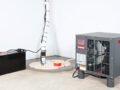
143 ViewsWater intrusion into basements and crawlspaces can damage building materials, encourage mold growth, and create persistent moisture problems. A properly designed drainage system and sump pump can help remove collected groundwater and reduce the risk of basement flooding. Before installing a sump pump in Davenport, IA, homeowners should understand pump selection, discharge options, installation requirements, and ongoing maintenance. This guide covers the key considerations for sump pump installation in Davenport, IA, including site assessment, pump and basin selection, discharge requirements, electrical considerations, and routine maintenance. What Should You Assess Before Installing a Sump Pump? Sump pump selection should account for how much water enters the basement, where the water collects, and how the discharge system is configured. The assessment should identify foundation drainage conditions and the points where water may enter or collect. Key factors to evaluate include: Foundation drainage and drain tile condition Groundwater conditions and expected water inflow Existing or proposed sump basin location Exterior drainage and downspout discharge locations Electrical service availability the pump circuit should be a dedicated line with GFCI protection, and the pump should never be run on an extension cord. If groundwater is entering through or beneath the foundation, a perimeter drainage system connected to the sump basin may be appropriate. Improving exterior drainage can also reduce the amount of water reaching the foundation. How Do You Choose the Right Sump Pump and Basin? Pump selection should account for the required flow rate, vertical lift, and friction losses in the discharge piping. Together, these factors make up the total dynamic head, the figure used to match a pump to its discharge conditions and the rating you will find on any pump spec sheet. Read More: How to Choose the Right Aluminium Door Window for Your Home Choosing between a submersible and a pedestal pump is an early decision. Submersible pumps sit inside the basin and handle higher water volumes more quietly; pedestal pumps mount above the pit, cost less, and are easier to service but take up more vertical space. For most Davenport basements, a submersible pump rated between 1/3 and 1/2 horsepower and capable of 2,000 to 3,000 gallons per hour provides adequate capacity under normal conditions. A typical sump pump system includes the following components: Sump pit: Collects water at a low point below the surrounding floor level. A standard basin runs 18 inches in diameter and 22 to 24 inches deep; a weep hole drilled near the base allows water trapped beneath the floor slab to enter the pit. Primary pump: Removes collected water from the sump pit and sends it through the discharge line. Float switch: Activates the pump when the water reaches a preset level. Check valve: Prevents reverse flow after the pump is turned off. Discharge piping: Carries water away from the foundation. A minimum 1.5-inch diameter line is typical for residential installations. Costs for a complete system installation, including pit, pump, check valve, and discharge line, generally range from $800 to $2,500 depending on basin depth, pump capacity, and discharge routing. Where Should Sump Pump Water Be Discharged? The discharge line should carry water away from the foundation and discharge it at a location where it cannot flow back toward the home. Many Iowa municipalities prohibit connecting a sump pump to the sanitary sewer, and discharging onto a neighboring property can create a legal dispute. As such, confirm local rules before finalizing the discharge point. Proper pipe sizing and secure connections are important for reliable water discharge. In Davenport’s winters, a frozen or ice blocked discharge line is one of the…