









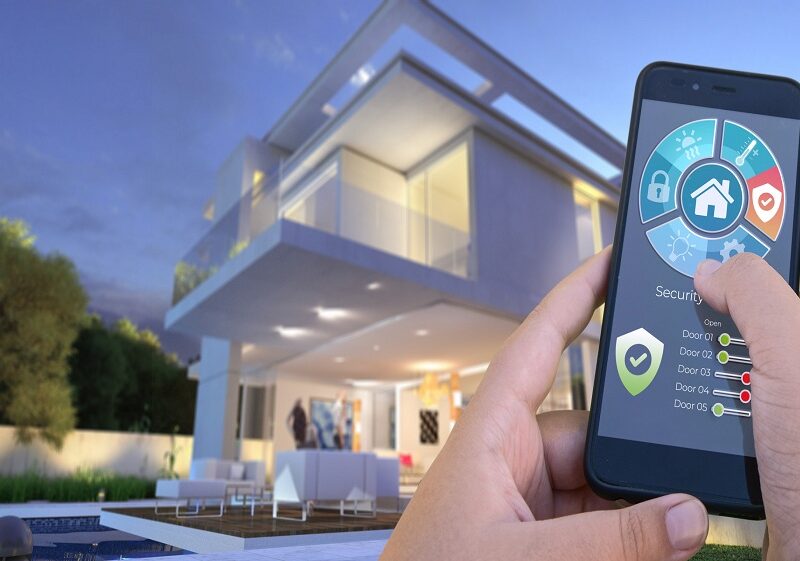

In the contemporary landscape of technological advancements, smart home technology plays a crucial role in shaping residential developments. As per Joe Cianciotto, a smart home basically refers to a residential property that is equipped with electronic devices. These devices can be remotely controlled by a smartphone or tablet. Homeowners today prioritize convenience and efficiency, which is among the biggest reasons why smart home technology has gained significant popularity in recent years.
Joe Cianciotto provides an insight into a few key features of smart homes
Driven by technological innovation, modern living spaces are undergoing a profound transformation. The concept of the smart home has, over the years, evolved from a futuristic idea to a tangible reality. It is revolutionizing the manner in which people interact with their living environments. Smart home technology is fundamentally changing the way people live. The roots of this technology can be traced back to home automation, which focuses on simplifying and enhancing discerning household tasks. With the advent of artificial intelligence (AI) and Internet of Things (IoT), smart homes have evolved into integrated ecosystems that offer improved efficiency and convenience. Integration of IoT devices is central to smart home systems. Such interconnected devices, like smart thermostats and voice assistants, seamlessly communicate with each other to create a living environment that is cohesive and responsive.
Here are a few key features of smart homes:
- Seamless control and connectivity: Smart home systems allow for seamless connectivity and control. Homeowners can monitor and manage diverse aspects of their home, like appliances, security, and lighting, remotely through smartphone apps or voice commands.
- Voice-activated assistants: Today, virtual assistants have become an integral part of smart homes. Voice activated assistants respond to verbal commands, allowing homeowners to play music, control devices, and more without having to lift a finger.
- Intelligent energy management: A smart home allows for efficient energy management. Smart plugs, energy efficient lighting, and smart thermostats allow homeowners to optimize energy consumption and reduce utility bills by controlling devices through automation.
- Enhanced security and surveillance: Smart homes are often equipped with doorbell cameras, motion sensors, and smart locks, which provide homeowners with real-time alerts, as well as the ability to remotely monitor their homes.
- Personalized home entertainment: With smart home technology, homeowners can enjoy personalized home entertainment experiences. It allows residents to stream content on demand, create customized playlists, and even adjust lighting and ambiance to match their mood, simply with a few swipes on a smartphone.
- Health and wellness monitoring: Features related to health and wellness are increasingly integrated into smart homes. Wearable devices and connected health monitors help transmit data to smart home systems, making it easy for homeowners to track their well-being and receive personalized insights.
As Joe Cianciotto points out, smart homes are especially well-known for their automation and routine optimization. They allow homeowners to create schedules that adjust temperature, lighting, and other settings on the basis of their daily routine, thereby enhancing both comfort and efficiency. The automation capabilities of smart homes also facilitate sustainable living. Smart irrigation solutions, intelligent water management systems, and energy-efficient appliances help lower environmental impact while conserving resources.